
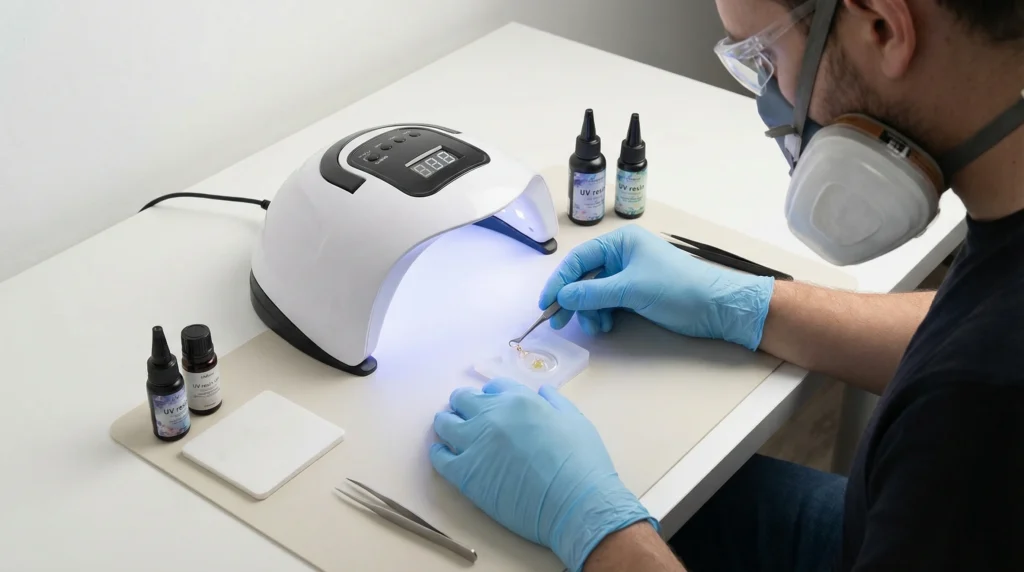
UV Resin Safety: A Simple and Beginner-Friendly Way to Start Working With Resin
For many people interested in resin crafts, safety concerns can be the biggest barrier to getting started. Questions about fumes, skin contact, mixing problems, and curing often put beginners off before they even get started.
This is where UV resin stands out as a practical and approachable starting point, far easier right from the start.
While no resin should ever be treated casually, UV resin takes away many of the complications that make traditional two-part epoxy resins feel intimidating for beginners, especially when working on small projects.
Why UV Resin Safety Is Often Easier for Beginners
UV resin is supplied ready to use, which means there is:
- No measuring
- No mixing ratios
- No waiting for chemical curing reactions
- No need to de-gas
You apply the resin, expose it to a UV lamp or strong sunlight, and it cures within minutes. This simple and immediate curing method helps beginners focus on learning technique and control, rather than worrying about whether something has gone wrong internally with a mix.
Because UV resin is usually used for small items, such as jewellery, coatings, charms, or decorative details, the overall exposure and risk is much lower than with larger two-part epoxy pours.

UV Resin Safety: The Essentials You Should Know
Even though UV resin is simpler to use, it is still a resin and basic safety practices are important.
Key points to keep in mind with UV resin safety:
- Ventilation: Work near an open window or in a well-ventilated room, especially when curing.
- Skin protection: Wear disposable gloves and avoid direct skin contact with uncured resin.
- Eye safety: Take care when curing under UV lamps and avoid looking directly at strong UV light. Safety glasses can also help prevent splashes.
- Face mask: A respirator-style mask should be worn unless you are working outside or in a properly ventilated workshop.
- Full curing: Make sure the resin is completely cured before handling or wearing finished items.
- UV lamps: Never look directly at the lamp when it is switched on, and avoid placing uncovered hands under the lamp while curing.
These precautions are straightforward and quickly become routine. They are not complex or expensive, but they do make a real difference.
Occupational Safety and Health Administration
For general guidance and additional information on working safely with resins and chemicals, see the official safety advice from OSHA. OSHA link
Why Small UV Resin Projects Build Confidence
One of the biggest advantages of UV resin for beginners is that mistakes are easier to manage.
If something goes wrong:
- The project is usually small
- Less material is wasted
- Adjustments can be made quickly
This allows beginners to understand how resin behaves, how it flows, how it levels, and how curing works, without the pressure of large moulds, big mixes, or long cure times. You still need to consider the thickness of your layers when pouring a piece.
That confidence often makes it much easier to progress to epoxy resin or more advanced projects later.
When UV Resin May Not Be the Right Choice
UV resin isn’t suitable for every application. It is not ideal for:
- Thick or deep pours
- Large moulds
- Structural or load-bearing items
In those cases, traditional epoxy resin is usually a better option and requires a more thorough understanding of resin safety and handling. You can find more information on this topic on our Resin Safety page.
Contact Us
We hope you found this information on UV Resin Safety helpful! If you have any questions or need assistance, feel free to reach out. Please note that due to government regulations, you’ll need to sign in and confirm your message. We apologize for any inconvenience.
Author: Rob